
Is Hot Sake Bad?
No! Until the 1970s, the average Japanese home did not have a refrigerator, so almost all Sake was made to be served room temperature or hot. Statistically, hot Sake is still very popular and serves as a digestive aid.
In America, restaurants usually serve cheap Sake hot, but as long as you enjoy the flavor, don't let that knowledge stop you from enjoying it. If someone more experienced with Sake has intentionally selected a Sake to serve warm, you can definitely expect heating Sake to improve the flavor.
How Hot Should I Drink My Sake?
Heating a robust or full-bodied Sake can absolutely enhance rice-forward flavors, including Umami. There are several target temperatures, but the main two are "warm" and "hot", 40°C (104°F) or 50°C (123°F).
At 55°C (133°F) many flavors begin to evaporate out of Sake. To help you get a sense of that, my kitchen tap maxes out at 130°F, so if yours is like mine, try letting it heat up and feel how hot that is to compare.
Can any Sake be heated?
No! Well... physically yes, but you shouldn't heat most Sake. Delicate, light-bodied Sake containing fruity or floral aromas and flavors are usually best enjoyed at cold or cool temperatures. Heating Sake unravels these flavors and sends them flying, causing them to dissipate or vanish completely. There are of course some exceptions, so don't let this general guideline completely prevent you from experimenting.
Which Sake Can Be Served Hot?
The best Sake to warm up have fewer delicate aromas and flavors and more body. The flavors and body are derived from the rice itself and the method of fermentation, rather than the yeast itself. Sake styles such as Futsushu, Junmai, and brewing methods like Kimoto and Yamahai tend to have more of these qualities.
Even then you may prefer their flavor cold. However, heating Sake can permanently alter the flavor, so treat it like cooking a steak: there's no going back. Try it cold first, then room temp, then pour a small portion to heat separately to see what you prefer.
How Should I Heat Sake?
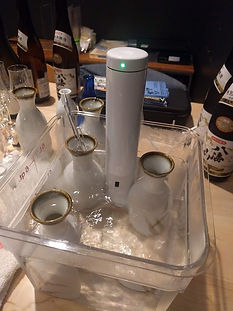
Indirect heat is the only recommended way to heat Sake. One method is to boil water, pour your Sake into a ceramic carafe (like the Tokkuri pictured above), insert a thermometer into the Sake, remove the carafe from the water once it reaches 50°C (123°F) or 60°C (140°F), wipe off the bottom, and serve to your guests.
A simpler, more modern method is to place the Sake bottle or carafe in water and use a Sous Vide to heat the water to your target temperature. Always serve in ceramic, earthenware or tempered vessels to prevent shattering from sudden temperature change, and to retain the heat longer.
Understand the ceramic vessels will absorb heat initially, so preheat them with hot water if you want to maintain a specific temperature. Always store Sake cold and away from sunlight when you can, even if you're going to serve it hot.
Can I microwave it?
No!
Really?
Yes, really!
Why can't I microwave it?
Microwaves heat by exciting water molecules to produce heat, warming from the outside-in. Since Sake is never less than 79% water, this denatures (read: *cooks*) all of the delicate and helpful flavors and nutrients in the Sake. Microwaves also heat much faster, making it easier to overheat or superheat your Sake, which is both dangerous and a waste of good Sake by destroying the flavor.
What about Hot Sake Machines?
If you have a business and plan on serving hot Sake, we can discuss options. Professional grade Sake heaters, how they work, and where to get them is one more decision SAKE SECRET can help you with.
SAKESECRET.com will continue to grow as a resource and a space for inspiration. Check back frequently for new offerings, such as updates to this blog, or better yet:
Get involved! Keep the conversation going in the comments. Share your experiences with hot Sake, favorite labels, or places to enjoy it.
Or come by and ask to try some Hot Sake or get a recommendation for something to heat up at home!
Kanpai!